Monday, March 6, 2017

I am king of these tortured lands

Source

I am king of these tortured lands
I ruined them -- I made them die
Amidst the wastes my castle stands

"Bring precious ores," were my demands,
"Level mountains where treasures lie"
I am king of these tortured lands

My subjects toiled on my commands
They obeyed me -- I know not why
Amidst the wastes my castle stands

Where forests stood now sift cold sands
All the rivers and lakes are dry
I am king of these tortured lands

Far the desolation expands
Lone I suffer, repent, and cry
Amidst the wastes my castle stands

A knight quests here and understands:
You cannot help me, you say goodbye
I am king of these tortured lands
Amidst the wastes my castle stands

--

Saturday, July 9, 2016

The sky over Holy Hill


COMPLETED

Two campers get a taste of cosmic horror in Holy Hill State Park.

PARTS: 1, 2, 3

We needed to find shelter. We needed to go to Holy Hill. The rock loomed on the horizon, blacker than the night sky above it and drawing us ever closer. 

3415 words


Thursday, July 7, 2016

Looking backwards

I'm almost two whole months out from graduating college, and have only just begun rifling through old things I wrote. I'll be posting them here because...no real reason, but I want to delete them from my computer and collect my silly writing.

As an engineering major forced to take an ethics/philosophy class, forced into a specific ethics/philosophy class by an ex-lover, I rebelled against the material by (essentially) shit-posting. Even so, my haphazardly-done essays are still fun to read, and I hope that class successfully rounded out my education.

Thursday, June 2, 2016

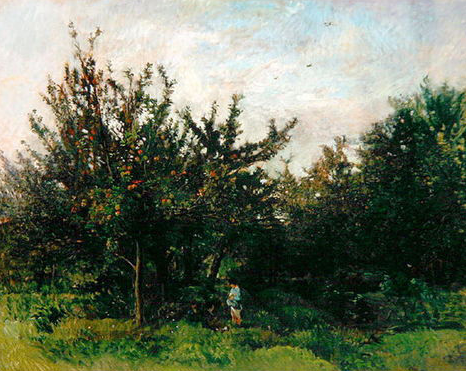
Brother sleeps in the orchard there


Brother sleeps in the orchard there
Under the loam at high behest
Now harvest rich is my despair

The earth's wealth is for all to share
Throughout the lands our fruits are best
Brother sleeps in the orchard there

Our pears are gold, our apples rare
Cold, dry bones among roots do rest
Now harvest rich is my despair

Our croplands are beyond compare
Rich with life, and magic possessed
Brother sleeps in the orchard there

The leaves bring screams through the night air
From all below, betrayed, distressed
Now harvest rich is my despair

'neath stone and soil his life was pressed
By flesh and blood the land was blessed
Brother sleeps in the orchard there
Now harvest rich is my despair


Thursday, February 4, 2016

We met in fair Arcadia


We met in fair Arcadia,
As seedlings in the vale,
Transformed new from those gentle greens,
To shepherds of the dale.

Under the sun and cloudless sky,
We walked over the sod,
Searching for tender, soft-mouthed beasts,
For flocks meek, mild, unflawed.

In pastureland we spent our days,
With drowsy sheep nearby,
Playing our lutes, harps, drums, and flutes,
For grass that did not die.

We lived in this idyllic place,
Far from the rot of towns.
In our pure meadows we picked flowers,
And wove them into crowns.

Tribute we paid to our one god,
Three lambs and a bouquet,
Blessed he our land with subtle rain,
And kept discord away.

But even he could not prevent,
Our latent jealousy,
Which unpristined our precious plains,
Ruptured serenity.

You killed my flocks and plagued my crops,
And planted in me seeds,
Of sorrow, spite, and misery:
You covered me with weeds.

You did me wrong and in me grew,
A darkness just like yours,
That gave me strength to bide, endure,
And ready for the wars.

You cast a torch into my field,
Laughing as it burned,
But I had fire just like you,
And wrath that you had earned.

These former perfect, quiet shepherds,
Did revel in this scourge,
Anger bloomed in our savage souls,
From which grace we did purge.

Our paradise we turned to soot,
Will not recover now,
For it suffered a mortal wound,
And life it won't allow.

From ash and smoke we were born new,
And walked back out from Hell,
We turned away, did not look back,
And bid us each farewell.

My dear old friend, do not despair,
See me as I see you:
Know you ruined my Arcadia,
And I destroyed yours too.


Monday, February 23, 2015

I see the North Star in the deep black sky...


I see the North Star in the deep black sky
And I go to the mountains guided by
Its light -- I shall quarry those great ancient
Sentinels for their stone, carve them, patient,
Play mason, cover them with blood, no faults --
I will build my staircase, no rests, no halts
Ascend to yonder void -- you may watch me
O Moon, you may watch me toil, and then see
Me suffer, but know that  I need only
Starlight and your moonbeams, dew and holy
Night air are my manna -- watch me lay waste
To the land, behold, O Moon, my long chase
To the Heavens -- and I will reach my goal:
The North Star, and it will swallow me whole


Saturday, February 14, 2015

Before time began...


Before time began, the Creator in his grand
Design, eons ahead, thought of you, and he planned
This specimen of Man: "I will make him handsome
And tall, give him a forelock for charm, smile winsome
And sweet, give him brains along with brawn -- he will be
Smart and strong, intelligent and thoughtful, and he
Will dream of the moon and sun while he walks the ground --
I will give him Apollo's image, dark hair crowned
With wreaths of ambition as with arrows and bow
He chases down rare thoughts to make real -- I bestow
Him with vigorous arms and chest and back to bear
Endeavors only he can attain -- nearly there:
To perfect him for her, his beauty's beholder,
I shall scatter some freckles across each shoulder."


Monday, February 9, 2015

Mermaid Yearnings


Four months before I turned nineteen,
I swore I’d fall in love.
With hook and line I’d catch a fish,
And bring him up above.

So then I dreamt of marlins, sharks,
Swift sturgeons and the sort,
But Neptune sent me lavishly,
A mermaid from his court.

He blessed me thus and summoned forth,
This Nereid of song,
With nacre tail and foam-blue hair,
And magic rare and strong.

To lovelorn me she sang and sang,
Emerging from the sea,
With star-filled eyes and salted lips,
She said, “Now follow me.”

She lured me, pulled me, dragged me down,
Into the endless blue:
Thalassic doom of mortal me,
I knew this to be true.

Though beguiled by this lovely nymph,
I feared her tender kiss,
For I can grow no fins, no gills:
I’d die in her abyss.

Thus linger long and I will drown,
Know not their mysteries,
Perish, not see their ocean deep,
Nor join their reveries.


Monday, January 26, 2015

The Man on the Moon


I killed the Man on the Moon,
Because he was watching me.
Because he had big old eyes,
Attached to his big old brain,
And because of how far he could see.

He knew many things,
My thoughts and my dreams,
And wrote them all down in his book.
"Sinner beware,"
Said he from up there,
"To know you I need only to look."

This sinner took note,
This sinner looked back,
Straight out to the Man on the Moon.

"Old man you beware,"
Replied sinner from there,
"You saw me and now I see you.

"I see with my eyes,
Attached to my brain,
And see that I frighten you.

"You live far up there,
Stuck fast out of fear,
And now I see why you do what you do."

He saw my thoughts still,
My intention to kill.

I went to the moon,
Not a moment too soon,

And I took away his book.
The moon shook.

Look.

I now am the Man on the Moon.


Thursday, January 8, 2015

Goodnight, Luna


My name is Luna and while I've had my share of nightmares and sleep problems, none compare to this particular experience. The summer between sophomore and junior year of high school, I went to sleep away summer program for the first time. It was hosted at a college campus near my house, was to last for ten days, which was, up to then, the longest time I had ever been away from my family. On top of that, my period was due, and I was at the age where the logistics of getting my period away from home was something that really worried me.

Those were two things that contributed to my stress during that very first day, but there were other things. Some of the rules that were put in place by the program directors made me worry. If you opened them between 10 PM and 8 AM, an alarm would go off. In the event of a curfew breach, all the people in the hall were expected to line up outside their doors for a head count. We were given keys that we would have to pay $75 if we misplaced. I was at the age where having all these rules that I could potentially tread on gave me all sorts of worry.

All that said, the first day went fine. The activities were reasonably fun, and the people there were decent. My roommates were decent – I was in a triple – and one of them brought a whole suitcase full of snacks, which I thought was absurd. But anyhow, they let me have the top bunk, and when the counselor came at 9:59 PM to take roll, I was already tucked in, ready to go to sleep.

I couldn’t stop thinking about the rules. What if I needed a drink of water? What if there was some kind of an emergency? Surely, in a dorm full of teenagers, at least one of them was going to get their period, need to go to the bathroom. What then? Would they just have to open the door and set off the alarm?

These were the thoughts that occupied me, and I stared straight up at the ceiling at this splotch on the wall. It was bright enough outside where I could see a hazy outline of a dark stain on the ceiling right about my face. I don’t know if they still do Rorschach inkblot tests, but that’s how I felt staring at the stain. I figured that by staring at something that reminded me of a period stain – and then, it looked like the Big Island – I would stop worrying about my actual period, and that was sort of correct.

From the second I went under the covers, covered my head with a sweater, and closed my eyes, my brain was firing on all cylinders. I couldn’t possibly fall asleep, as preoccupied as I was. Then came the mess on the ceiling, and soon, I became fixated with that, how at one moment it was Hawaii, then the next it seemed more like a biscuit split open, then something else. It changed, little by little, and I felt all the more relaxed looking at it than I was before.

When the stain got boring, I only needed to turn my head to the left and look at snack girl fast asleep on her single bed. The light outside cast shadows from the shrubs outside, and I knew it was moonlight because as time passed, the shadows would shift. I spent a good deal of the night doing that, switching between ceiling splotch and shadows, all the while willing myself to attempt to fall asleep.

I really did try, and though I was starting to feel my eyes straining, nothing happened when I shut them. No matter what, I was uncomfortable. It was too hot, and then it was too cold. I suddenly wanted a drink of water. I wanted to go to the bathroom. I was hungry. I felt like vomiting. Nothing felt right. My head started to hurt.

I felt as if I were floating on the surface of the ocean, and every time I shut my eyes, I would only go down superficially, and that there was a darker column of water below me that I couldn’t sink into – simply put, I couldn’t fall asleep.

This wasn’t new. I’ve had sleepless nights before, and they had always preceded stressful or exciting mornings. From the age of three to six, I couldn’t fall asleep, or at least, I couldn’t remember sleeping. Up until I was ten, I regularly sleepwalked, and it became so much of a problem that my parents had to take me to a doctor to get checked out.

All this to say, I’m no stranger to sleep abnormalities, and I knew that after just this one sleepless night, I would have to find a good cup of coffee to keep me active the following day.

I shut my eyes and attempted to fall asleep for the last time when I felt someone slap my side. Alarmed, I opened my eyes and tried to cry out, but I couldn’t. Cold panic washed over me and when I tried to sit up, I barely got high enough to look at who it was.

Two figures, two girls, and I thought they must have been my roommates, ready to pull a cruel trick on me. No – to my left, snack girl was still asleep, and I would have noticed them climbing onto my bunk anyways. I let my eyes adjust in the darkness and saw that they were identical, lean girls, with straight black hair coming down to their shoulders. The one on the right was sitting on my thighs and she wore a green raincoat.

“You’re awake,” they said in my voice. I looked closer, and they looked back at me. They were me, both of them were me. “Hello, Luna.”

Believe me, even sleep-deprived and worried out of my mind, I still knew that something like that was impossible. At the time, they were as real to me as every other fixture of the room, all the furniture, my snack girl roommate, the blankets around me, the shadows on the walls, the stain right overhead. I knew that they were real, that they were flesh and blood, and even now, I can’t explain myself. 

I had only shut my eyes for a few seconds, and they appeared in that time. When they ‘woke’ me – and I say ‘woke’ loosely because I could swear that I hadn’t fallen asleep, I was awake that entire night – it was instantaneous. All of me was just as fatigued, exhausted as I was right before they arrived.

I realized suddenly that I couldn't move. It wasn't just that they were sitting on my legs, it was that I simply couldn't move anything below my neck. I was completely paralyzed and helpless. The two of them kept on watching me, smiling because I’m sure they knew what I was thinking.
“Luna,” said Left-Luna, “You need to get up early tomorrow. You need to be at the…”
She turned her head aside and began talking to Right-Luna and I couldn't hear what they were saying. They were laughing quietly between one another and every time I felt a new wave of terror rising up in me, they looked straight at me.

I tried calming myself down, and watching the stain on the ceiling again, watching its boundaries tremble and rearrange, was making me relax. Suddenly, I found myself propping up my upper body on my elbows, bringing me closer to the two other Lunas. It was much more comfortable watching them from that position, and when I looked at them again, they started to talk to me.

I can’t remember the details of the conversation, but I remember that it was mundane. They asked me things about my life and the people around me and I answered them easily. I remember, though, that the three of us were all talking in low voices, but still, it was probably loud enough to wake my roommates, but they told me they would stay asleep.

As calm as I had become, I never shook the feeling that the two other Lunas were off. They looked at me together, or they looked at each other and said things too quietly for me to hear. When I got uncomfortable – when I said I was thirsty, or that I had a headache – they sat down heavily on my legs. Left-Luna would grab my ankle or Right-Luna would grab my wrist, and I could feel this low frequency hum and my bed would tremble.

They could feel all my thoughts and emotions, and went from laughing with me to darkening the room and sending my skin crawling with cold ants.

“This is the first time you’ve seen us,” said Left-Luna, as she dug her nails into my ankle. The hum grew louder and I felt as if my brain were trembling with it. “Both of us. Usually it’s so hard to even wake you up, and even then, you can’t see us.”

“But we see you, Luna,” said the other one, “We see you. Goodnight, Luna. Sweet dreams.”

I found that I couldn’t speak anymore, and they sent me lying flat again, arms pressed to my sides. My mouth was shut but I could feel my jaw lock, my bottom teeth pressing against the backs of my top ones, pushing forward and forward as if I were trying to blast through an overbite. It hurt like nothing I’d ever felt before and the bed started quaking under me, and the hum became so deafening that I just wanted to wake up.

Only, the thing was, all of it stopped suddenly, and I was just where I always was – lying on my back in bed, staring at the ceiling. The stain was there. The shadows on the wall had moved, and I could tell from the light that I had been awake for hours and hours. I remained like that all the way until the sun peeked through the plants outside.

I won’t forget this, and I can’t explain it – I can only tell it as truthfully as I remember. When I got back home, I looked it up and read about sleep paralysis, which is about as good of an explanation as I can get. All I know is that from my fallible, malleable memory, I did not sleep a moment that night. Mentally, I was aware and present and lucid, and the two Lunas were just as real as I was. I spoke to them, I engaged them, and they manipulated my surroundings in a way that I should not experience beyond the realm of dreams. That’s all I know. I haven’t seen them since. Now, every strange thing that happens in my sleep will, at the very least, not be as bad as the night the other Lunas visited me. 

Sunday, December 21, 2014

Dear Dorothy


Dear Dorothy,

I remember that you scorn all things handwritten – you type everything, I remember, even though your handwriting is lovely and straight, like white picket fences, birthday candles, and pushpins on the corkboard above your bed – but perhaps you will find some empathy within you to read this. I can imagine you now, wherever you are, reading this, perhaps at your desk, or perhaps at a cafĂ© at your lunch break. Perhaps you have a cup of coffee – it looks black because it fits your personality, but I know you put three teaspoons of sugar inside it, I know that about you – and perhaps you are pulling a cigarette out of the slim silver case from your handbag. I see you exhaling the smoke in a long, lazy cloud. You used to blow it into my face, and you would toss your head back, laughing, when my eyes began tearing up. I coughed, you didn’t. I remember that about you.

I remember many things about you. Your name was Dorota officially, on your letterheads, followed by your degree, your department, and the name of our university. Dorota was serious and grim, who, standing at six feet could look down at professors with her fierce black eyes lined like a cat’s, and you were Dolly to fools who thought they could control a wild thing like you, and because I knew better, you were Dorothy. You were Dorothy to everyone, and I am no exception. You, Dorothy with the formidable surname, a jumble of eastern European syllables impossible to say, intimidating in typeface, of wild beauty when dragged out in ink by your hand.


I remember you in fits and bursts, Dorothy, glimpses of you in the throngs on the plaza, dark colors, exquisite hair, lips marked with a poisonous red. I still look for you in the crowds, and sometimes I see you thrown to pieces and scattered amongst strangers, your smart black shoes, your swift and purposeful walk, your haughty bark of laughter. I remember the smell of your perfume – you puffed it onto me once to see if I could be dangerous and elegant like you, it didn’t work – but nobody wears it like you do, Dorothy.

I remember the first time I saw you. It was September and it was warm, and you were lounging on the glade, shoes flung aside, book in your lap, cigarette between your fingers. I sketched you in red colored pencil. You didn’t know this at the time, didn’t see me because I was an insignificant speck of an individual, but I was shaking with anxiety. When I told this to you, you laughed at me, of course.
I had amassed an embarrassing amount of sketches of you, Dorothy, by the time we met. Do you remember that windy April morning? The wind carried my sketches your way, and you collected them, handed them back to me, and teased me because I was one of your many admirers. Somehow, I dared to ask if I could paint you, and perhaps because you indulged every opportunity to be worshipped, you took me to your lair.

Dorothy, you swallowed me whole. You picked me up by your fingertips and dropped me down your gullet. I was lost the moment I crossed the threshold, into your house, the sacred box, a too-small cave for a dragon queen, draped with deep reds and hung with neat photographs of enchanting places familiar to you, arcane to me. This is the chamber of Dorothy, but you laughed and dug your elbow into the pillow and peered at me with your venom eyes.

I recall it was during a hot spell in the spring, and the window was cracked open, and only for you. You didn’t offer me a drink or anything, and you, you could fan yourself with my sketches if you liked, and slip out of your costume to reveal armor and naked skin, scales of a terrible, beautiful beast that I could not hope to comprehend. I felt silly even taking off my scarf, and so I suffered there in your room, breathing in the heady, nauseatingly powerful odors of flowers plucked from the side of the mechanical engineering building smudged along every surface. Dead flowers swooning in the corner, wilted and browned, still belching their fragrance – and I was growing faint and you laughed as you put your clothes back on.

When I close my eyes I perceive you – a tall, dark woman with a quick, straight gait, loping across campus with books under one arm, a cigarette wedged between oxblood lips. I can paint you with a few quick strokes of India ink and have it recognizable, Dorothy, but it isn’t you. I’ve tried. I’ve created you in ink and paint and charcoal, worked your dark lipstick into the paper and canvas, sometimes smudged along with my ring finger, other times straight from the bullet, dangerous and bold like you were. I picked the flowers, redolent and pressed them against your image – smutty, slutty fragrance, lacking in elegance, inadequate to describe you.

Dear Dorothy, these are for you. Sketches, all, but fitting of the brevity of our acquaintance—and you don’t think much of art, anyways. I was too frightened – and still, I am frightened – to say you were my muse, but you were, you who scorned art and love and beauty, frivolities and pointless indulgences. I remember this about you. You, who had an engine in place of a soul, as you told me one time when I tried to read you poetry – I remember this about you.

And when I told you that I loved you, you laughed in my face. I, scarcely past girlhood, an artist(you said this derisively, you were derisive of art in general) of feeble talent and creativity, no use to a civilization that marches towards the future – how dare I court you? You told me you had no need for desperate warrior artists, and would not care to read whatever lovelorn drivel I sent your way, if it was anything like how I behaved. I remember this about you.

And because I remember this about you, I can feel safe that you will never read these words or look at these sketches. The envelope may smell like the flowers – gardenias, I looked them up – but you are Dorothy, Dorota ascended to meet the new America, the new woman resplendent and powerful, and you will have forgotten me. You will not read this, and this realization comes with relief and not despair, dear Dorothy, I know this about me, because you have taught me to be this way, I know this.

I still bear the scars your claws, your fangs, your dark kisses adorned me with. Your dragon fire scorched me from head to toe, blackened and burned me until I was not me, not a person any longer, but your prey and your possession, yours to destroy and to create in an image that pleased your passing fancy. You ravaged me and you forged me and you left me.

You will have forgotten me, but I remember you, Dorothy. I loved you, I loved you, I loved you, and I wish you well.

Love,

An admirer


Wednesday, August 13, 2014

Serpent Imagery and Symbolism - Lura Nancy Pedrini, Duilio T. Pedrini (1966)


"Whether the serpent is the 'founder of Romanticism' is questionable, but nevertheless it is an interesting suggestion. Little research is required...to discover the profound influence the serpent has had on the thoughts and literature of all people since the beginning of time. At times, the snake is regarded as sacred, at other times profane, or sometimes as an object evoking both reverence and hatred, but the snake is rarely considered just an ordinary animal pursuing its own way of existence with no significance for man...The Romanticists were fascinated by the serpent and were interested in its symbolic and imaginative value." - Pedrini, Pedrini (1966)

As probably none of you know, one of my greatest prose projects - several works of varying lengths and at varying stages of completeness and/or development - is a project I fondly refer to as Serpents. In preparation for my efforts in actually putting some ideas down to paper, I've begun to do some more reading. I hope to compile a sort of annotated bibliography for it onto this blog.


The first book is Serpent Imagery and Symbolism by Drs. Lura Nancy Pedrini and Duilio T. Pedrini of Princeton University. It is almost precisely what it says on its cover with the small exception that...

...the cover neglects to mention that the entire book is about serpent imagery and symbolism precisely in the works of Romantic poets and only Romantic poets.

This is not exactly what I was looking for. Also, not being a huge poetry buff, I was less engaged than I had hoped to be while reading a book entirely about serpents.

As I'm not well-educated on the ways of reading books about...reading poetry...I won't attempt to write a great deal of critique or anything that resembles a review. This isn't my aim. I'm working on a project that will inevitably have a great deal of serpent imagery and symbolism, so what's said in this book, while I'm not a Romantic and don't want to be one, is still useful.

The table of contents does a fair job at delineating what, exactly, this book is about. The title will be followed either with a representative quote from that section, or a remark from yours truly. My remarks are in italics. Here it is:

I. Symbolism and Romanticism - this first chapter serves to establish the significance of the symbol as a conduit between the spiritual/intangible world and the physical/tangible world. This is especially important as Romanticism seemed, at least to me, to be a reactionary expression of dramatic and powerful imagination and creativity and emotion against scientific rationality and empiricism...or something similar.

II. The Serpent and Romanticism - "No literary movement has lent itself to a greater expression of symbolism than Romanticism; no animal has lent itself to more symbolical interpretation than the serpent..." (26)

III. Serpent Imagery in the Major Romantics - chapter III subdivides serpent imagery into six sectors, then analyzes examples from poets William Blake, William Wordsworth, Samuel Taylor Coleridge, Lord Byron, Percy Shelley, and John Keats (always in that order) for each of these categories.

  1. Man's emotions
  2. Man's physical and mental attributes
  3. The whole man
  4. Areas and aspects of Man's life and experiences
  5. Natural phenomena and man-made objects
  6. Pictorial detail
These sectors overlap and since I'm not well-versed (get it?) in the source material, I'll let the following quotes help me out:

"The serpent images of the first five classifications are generally expressed in metaphors and similes. The last classification does not use the serpent for comparison but only for a description of a phenomenalistic world." (38)

"...images are analyzed in light of what they state, not what they imply." (39) - Imagery conveys obvious meaning while symbolism conveys latent meaning.

IV. Serpent Symbolism in the Major Romantics - chapter IV strays from the format of III where each category is discussed in that precise order of poets. Some of them don't have examples in all categories. The categories in IV are subdivided and themselves progress from positive symbolism of serpents to negative.
  1. Idealism
    1. Imagination
    2. Benevolence
    3. Pantheism
  2. The Fall of Man
    1. Serpent as beguiler
    2. Woman as serpent-beguiler
  3. Materialism
    1. Analytic reason
    2. Empiricism
    3. Sensuousness
  4. Man against Man
    1. Enmity
    2. Literary criticism
  5. Institutions against Man
    1. Kings and kingcraft
    2. Priests and priestcraft
"The reader, then, is permitted to see the Romanticists' view of a world deteriorating from a perfect, idealistic condition of love, innocence, and harmony to an imperfect, materialistic condition of hatred, guilt, and discord." (75) - Astute readers of The Smiling Spider (or of Tolkien or of Norse mythology or of ANYTHING about serpents besides Romantic poetry) will recognize that this link between serpents and materialism, the physical world, etc is very obvious, especially with the strong association of serpents with mineral wealth (GOLD! Dragons hoard GOLD! Serpents are, by nature, voraciously greedy.)

"No animal has lent itself to more symbolical interpretation than the serpent." (75) - I feel as if this exact sentence was used earlier on in the book (it was) but that the serpent is used to symbolize both extremes is a testament to its versatility and its great symbolic value.

Summary and Conclusions - the bulk of this slim book was systematic analysis of the works of Blake, Wordsworth, Coleridge, Byron, Shelley, and Keats in the previously delineated categories. But, at the end, there is a bottom line:

"Literature and art, in general, are abundant in symbols because the creative man is aware of the conflict between conscious and unconscious forces." (135) - well...obviously. To go even further, symbols reconcile conscious and unconscious, tangible and intangible, etc...

"...[symbols] probe the unconscious and give to themselves and the world a better meaning of life." (136)

But the real, real bottom line:

"Whether the serpent is the 'founder of Romanticism' is questionable, but nevertheless it is an interesting suggestion. Little research is required...to discover the profound influence the serpent has had on the thoughts and literature of all people since the beginning of time. At times, the snake is regarded as sacred, at other times profane, or sometimes as an object evoking both reverence and hatred, but the snake is rarely considered just an ordinary animal pursuing its own way of existence with no significance for man...The Romanticists were fascinated by the serpent and were interested in its symbolic and imaginative value."

Wednesday, May 21, 2014

Two Serpents - an Analysis of the Duality of the Midgard Serpent and Jormungandr in Norse Cosmology and Eschatology

Two Serpents
The serpent as an antagonist is a ubiquitous theme in world religion – agents of evil and chaos, serpents and their allies threaten the forces of good and order in near Eastern, Greek, Biblical and other Indo-European canons (Calvert Watkins, How to Kill a Dragon). Norse mythology contributes the Midgard serpent and Níðhöggr the dragon to this cohort. The source material typifies the two as beings of destruction, enemies of humanity and societal comfort and order, separate, unrelated examples of the same trope. Snorri describes them both: the Midgard serpent encircles the world, biting his own tail, and is Þórr’s antagonist, while Níðhöggr rends the World Tree from below and wreaks havoc at the end times (Snorri Sturluson, Edda). They appear as independent entities – spatially separated, with non-intersecting mythological roles – and both agents of chaos, enemies of cosmic harmony. However, further depictions of the serpents in the source material suggest otherwise – the primary descriptions are too superficial, and belies an interpretation of the serpents as an integral pair with a close symbolic relationship in spite of their distinct mythological. Closer analysis reveals a close duality between the two serpents, whose equal and opposite roles in the Norse cosmogony defines them as endpoints on the spectrum of cosmic order – JÇ«rmungandr as a symbol of order, and Níðhöggr of chaos.

Initially, it seems impossible that Níðhöggr and JÇ«rmungandr could be related –their paths do not intersect in either of the eddic or skaldic poetry. Two opposing terms, cosmic and chthonic, describe their spatial separation. The Midgard serpent qualifies as cosmic – he occupies the ‘deep sea which lies round all lands,’ with his tail in his mouth (Sturluson 27). Conversely, Níðhöggr is chthonic, dwelling underground – ‘Níðhöggr gnaws the bottom of [Yggdrasill],’ accompanied by ‘more snakes…than any old fool thinks,’ (Sturluson 17-19). Aside from JÇ«rmungandr’s excursions ashore in tales of Þórr’s fishing trip, Þórr’s journey to Ăštgarða-Loki’s, and Níðhöggr’s rampage at Ragnarök, the two are bound to their respective cosmic and chthonic realms, and thus have no opportunity for direct interaction. However, this independence does not invalidate a symbolic relationship between the two.
A concept borrowed from mathematics may help examine their spatial organization and its symbolic implications. The pagan Norse cosmos occupies three dimensions, concisely and completely represented by three directions: side to side, forwards and backwards, and up and down. Combinations of these vectors make every diagonal or curved line that can exist – these three independent vectors form a set that spans the three dimensional world, forming the basis of cosmic order. The Midgard serpent encircles the worlds that occupy the horizontal plane in Norse cosmogony – two of the three vectors span that plane – while the world tree forms the vertical axis, the third. This attribute affirms JÇ«rmungandr’s place among the cosmic serpents, is identity as spanning, containing the horizontal world symbolizing totality and continuity. The two combined form the basis of the cosmos, vertical and horizontal in all directions, an unbroken circle containing the world. He becomes a defining point in the construction on the mythological space, an integral element in is organization. JÇ«rmungandr’s affiliation with Yggdrasil completes this abstract representation of the world. On this fundamental level, JÇ«rmungandr is a being of cosmic order, rather than of cosmic chaos as he may immediately appear in the mythology.
Mathematical representation aside, JÇ«rmungandr, by virtue of being the antagonist of Þórr, protector of mankind, strongly resembles a being of chaos rather than order. Þórr’s repeated encounters with JÇ«rmungandr as detailed in Hymiskviða, Gylfaginning, and VÇ«luspá place Þórr in the ranks of Christ, Heracles, and St. George, archetypal heroes who oppose serpents, overtly terrifying manifestations of chaos, a familiar story of triumph of good over evil. Specifically, Þórr’s ultimate battle with the Midgard serpent represents the ‘last struggle of…the defence of the world-order,’ an explicit description of this struggle between good order and evil chaos (‘Ragnarök, an investigation into Old Norse Concepts of the Fate of the Gods’, John Stanley Martin, 1972). However, characterizing the symbolism Þórr’s relationship with JÇ«rmungandr purely by superficial comparison is inadequate. Further examination of the myths suggest that Þórr’s antagonism towards the Midgard serpent, perhaps in his view a manifestation of evil, is misdirected and contrary to his role as protector of the realms.
From Snorri’s description of this feud in Gylfaginning,Þórr’s first encounters the Midgard serpent during his trials at the court of Ăštgarða-Loki. In this myth, Þórr and his traveling companions engage in competitions or trials to earn hospitality – Þórr’s three include drinking from a horn, lifting a large cat, and wrestling a crone (Sturluson). While he and his companions ultimately fail these tasks, Þórr indeed comes close enough for Ăštgarða-Loki to explain the consequences of his almost success: the horn is linked to the sea, the cat is ‘the Midgard serpent which lies encircling all lands,’ and the crone is a personification of old age (Sturluson 45). Þórr’s success would have meant disturbing the whole of the sea, lifting JÇ«rmungandr out of the sea, and driving backwards the natural course of aging –Ăštgarða-Loki within the canon remarks that ‘ “…[Þórr was] going to bring us so close to great disaster…”’ (Sturluson 44). This declaration suggests that JÇ«rmungandr is directly linked to the maintenance of order, allied with the stability of the physical world and the course of life and death, items that must be preserved for normal function of the cosmos – Ăštgarða-Loki as the origin of this idea confirms it as canon. From this myth onwards, Þórr’s relationship with the Midgard serpent distinguishes itself from other hero-monster narratives, unique in that Þórr, the archetypal defender of order, directly contributes to chaos by engaging in this sequential fight.
The most significant textual suggestion for this comes in Hymiskviða, which details Þórr’s fishing trip with the giant Hymir. All renditions of this myth – Hymiskviða, and in skaldic poetry preserved in Snorri’s Edda – consistently describe Þórr’s drawing up of the serpent from the sea, their fierce locking of eyes, and, most importantly, Þórr’s intention to kill. The plot then diverges, with JÇ«rmungandr escaping in Hymiskviða, and Þórr successfully killing him in HĂşsdrápa and others. Snorri compiles these contradicting timelines, but ultimately decides that JÇ«rmungandr is free and lives on, safeguarding his version of the mythological cycle where JÇ«rmungandr and Þórr must battle at Ragnarök. In this direct confrontation between god and monster, Þórr and JÇ«rmungandr reenact ‘the universal opposition between the powers of the cosmos and the powers of chaos’ (Preben Meulengracht Sørenson, ‘Ăžorr’s Fishing Expedition (Hymiskviða)). While within this dragon-fight archetype, the heroic Þórr is the obvious opponent of chaos, in this myth, he appears to be its agent: ‘The sea-wolf shrieked and the underwater rocks re-echoed, all the ancient earth was collapsing…then that fish sank into the sea’ (Hymiskviða, Poetic Edda, Carolyne Larrington 81). Þórr strikes the serpent in this version, and in JÇ«rmungandr’s peril, the greater cosmos seems to be threatened. Sorenson amends his previous statement: ‘Here, the [Midgard serpent] has its function as the boundary of the circular world, and it is inherent in this meaning of boundary that the monster is a part of the cosmic order which will be destroyed if the monster does not stay in place’ (Sørenson 131). JÇ«rmungandr’s role as an integral element of the horizontal world is affirmed in the list of kennings that Bragi, god of poetry, gives in Skaldskaparmal: earth twister, girdler of all lands, necklace of earth, among others (Sturluson). Þórr’s fishing trip is then ‘an attempt to dissolve the cosmic order’ and its ultimate failure is ‘confirmation of that order’ that JÇ«rmungandr’s safety and stability protects (Sørenson 132).
From this analysis of his appearances in the mythology, it is clear that JÇ«rmungandr must be a creature of universal order, whose vitality directly relates to cosmic balance. But what of Níðhöggr? He is neither accounted for nor meaningfully related to JÇ«rmungandr in the mythology, and is absent from the previously described mathematically-inspired model of the Norse cosmos. Níðhöggr’s role in the mythos is largely vertical: in the chronology described in VÇ«luspá and Gylfaginning, he remains underground gnawing at roots until Ragnarök. At the end of times, ‘…Nidhogg sucks the bodies of the dead…’ before the world collapses, and in the final stanza of VÇ«luspá, takes to the sky: ‘There comes the dark dragon flying, the shining serpent…Nidhogg flies…in his wings he carries corpses’ (VÇ«luspá, Larrington 13). This upwards movement through space and time aligns Níðhöggr strongly with the vertical axis, which is already spanned by the World Tree, excluding him from contributing to the basis of the Norse world. However, this redundancy does not invalidate Níðhöggr’s contributions to the mythic cosmos. Níðhöggr’s mythological relevance is in his directly antagonistic relationship to the World Axis, the obvious symbolic vertical axis of the Norse world, which firmly align him as an agent of universal chaos, and enemy to structure and stability.
In the sparse mention of Níðhöggr in the source text present him uniformly as evil and chaotic, with nothing to recommend him as beneficial to mankind. Taking the World Tree as a symbol of universal order, Níðhöggr’s antagonistic behavior towards it directly threatens the stability of all worlds. The extensive bestiary associated with Yggdrasil contribute to its steady deterioration – harts bite its leaves; numerous serpents, Níðhöggr chief among them, gnaw its roots; and it rots from the sides – a strong metaphor for the inevitable increase in entropy of the universe (Georges DumĂ©zil, The Gods of the Ancient Norsemen, 42-143). Moreover, Níðhöggr’s role as a destabilizer is amplified by the squirrel Ratatoskr, who runs the length of Yggdrasil passing hateful messages to and from the chthonic serpent below and the giant eagle Hraesvelgr above (Sturluson). Just as hatred breeds instability within society, the hatred that passes by way of Ratatoskr understandably weakens the tree, on top of the other physical damage that it sustains. The mythology thus aligns Níðhöggr strongly with the side of evil, presenting him as an enemy of order and a being of chaos.
This interpretation of the serpents as a pair of opposites forms a basis for examination of their respective eschatological roles. VÇ«luspá, which describes the chronology from mythic past to mythic future, reveals the fates of the two serpents and serves as the inspiration behind Snorri’s Ragnarök narrative. JÇ«rmungandr’s fate is well-represented in other eddic and skaldic text, runic inscriptions, and other media – does battle with Þórr, and they both meet their demise. The Midgard serpent, leaving his place as the boundary of the worlds and forfeiting his role as a preserver of order, follows the present universe to its demise. The seeress describes total calamity in natural balance as heralds of the end times – the sun and moon are destroyed, ‘brother will fight brother…hard it is in the world, there is much adultery’ – and as the present world descends into complete mayhem, JÇ«rmungandr suffers (VÇ«luspá, Larrington 10). His vitality directly correlates with the natural order of the universe, and in Ragnarök, both JÇ«rmungandr and the world is destroyed.
Conversely, Níðhöggr thrives in the chaos. VÇ«luspá’s description of Níðhöggr is the most extensive of the sources, presenting two separate artifacts of his character. Níðhöggr’s diet is supplemented by corpses of murderers, adulterers, and oath-breakers in Náströnd, a punishing and markedly miserable region of Hel (VÇ«luspá , Larrington). In the final stanza of the prophecy, Níðhöggr flies overhead clutching corpses. This organization of references to Níðhöggr – he is introduced as gnawing the World Tree from below, then still as a chthonic dweller in Náströnd, and finally flying free. While the precise meaning of his flight is unclear, the fact that he is aloft where previously he was underground is significant. That Níðhöggr, clearly capable of flight in the mythic future, spends the mythic past and present as a subterranean wretch reliant upon Ratatoskr to pass messages of spite to the eagle above, implies that he is not powerful enough to fly, or has lost the ability to fly. At the onset of Ragnarök, moral decay plagues mankind, sending more villains to punishment as Níðhöggr’s food – greed and a voracious appetite, dragon characteristics both, take over. As he feasts upon these increasingly numerous evil-doers, Níðhöggr grows stronger while the world around him descends into chaos. From the final stanza, then, Níðhöggr, clutching his food, takes to the sky, sufficiently powerful to leave his place under the roots of the World Tree. Níðhöggr, creature of chaos, thrives off the increasing entropy, the increasing degradation of society, and lives strong where JÇ«rmungandr dies.
Here emerges their relationship as a pair of opposites, a serpent each a manifestation of either cosmic order or cosmic chaos. JÇ«rmungandr weakens and Níðhöggr strengthens as the world around them descends into turmoil – from their direct and inverse, respectively, relationship with cosmic order, they become manifestations of order and chaos. The dragon archetype that they appear to adhere to, whether by Þórr’s misguided attempts to harm the Midgard serpent in the name of peace and safety, or by Níðhöggr’s lack of a heroic opponent, cannot adequately describe their roles in the Norse mythology. In spite of surface similarities, the two serpents’ distinct mythological roles and symbolic significance unify them as a pairwise description of the balance of order and chaos in the universe.

Works Cited

Dumézil, Georges. Gods of the Ancient Norsemen. Berkeley, CA: University of California Press,
            1973. 141-150. Print
Martin, John Stanley. ‘RagnarÇ«k: an investigation into old Norse concepts of the fate of the
gods.’ Melbourne Monographs in Germanic Studies. Vol. 1. Ed. Constantin Kooznetzoff.
Melbourne, Australia: University of Melbourne, 1967. 1-147. Print.
Trans. Carolyne Larrington. The Prose Edda. Oxford World’s Classics, 2009. Print.
Sørensen, Preben Meulengracht. ‘Ăžorr’s Fishing Expedition (Hymiskviða).’ Trans. Kirsten
Williams. The Poetic Edda: Essays on Old Norse Mythology. Ed. Carol Larrington and
Paul Acker. Routledge, 2002. 119138. Print.
Sturluson, Snorri. Trans. Everyman. Edda. Everyman Paperback, 1995. Print.
Watkins, Calvert. How to Kill a Dragon. Oxford University Press, 2001. Print.


Friday, August 23, 2013

Dear Dorothy


I remember that you scorn all things handwritten—you type everything, I remember, even though your handwriting is lovely and straight, like white picket fences, birthday candles, and pushpins on the corkboard above your bed—but perhaps you will find some empathy within you to read this. I can imagine you now, wherever you are, reading this, perhaps at your desk, or perhaps at a cafĂ© at your lunch break. Perhaps you have a cup of coffee—it looks black because it fits your personality, but I know you put three teaspoons of sugar inside it, I know that about you—and perhaps you are pulling a cigarette out of the slim silver case, inherited from your father, from your handbag. I see you exhaling the smoke in a long, lazy cloud. You used to blow it into my face, and you would toss your head back, laughing, when my eyes began tearing up. I coughed, you didn’t. I remember that about you.

I remember many things about you. Your name was Dorota officially, on your letterheads, followed by your degree, your department, and the name of our university. Dorota was serious and grim, who, standing at six feet could look professors down with her fierce black eyes lined like a cat’s, and you were Dolly to fools who thought they could control a wild beast like you, and because I knew better, you were Dorothy. You were Dorothy to everyone, and I am no exception. You, Dorothy with the formidable surname, a jumble of eastern European syllables impossible to say, intimidating in typeface, of wild beauty when dragged out in ink by your hand.


I remember you in fits and bursts, Dorothy, glimpses of you in the throngs on the plaza, dark colors, coifed hair, lips marked with a poisonous red. I still look for you in the crowds, and sometimes I see you thrown to pieces and scattered amongst strangers, your smart black shoes, your swift and purposeful walk, your haughty bark of laughter. I remember the smell of your perfume—you puffed it onto me once to see if I could be grown-up and mature like you, it didn’t work—but nobody wears it like you do, Dorothy.

I remember the first time I saw you. It was September and it was warm, and you were lounging on the glade, shoes flung aside, book in your lap, cigarette between your fingers. I sketched you in red colored pencil. You didn’t know this at the time, didn’t see me because I was an insignificant speck of an individual, and when I told you I was shaking with anxiety, which you laughed at, of course.

I had amassed an embarrassing amount of sketches of you, Dorothy, by the time we met. Do you remember that windy April morning? The wind carried my sketches your way, and you collected them, handed them back to me, and teased me because I was one of your many admirers. Somehow, I dared to ask if I could paint you, and perhaps because you indulged every opportunity to be worshipped, you took me to your lair.
                Dorothy, you swallowed me whole. You picked me up by your fingertips, nails short but painted prim pink, and dropped me down your gullet. I was lost the moment I crossed the threshold, into your house, the sacred box, a too-small cave for a dragon queen, draped with deep reds and hung with neat photographs of enchanting places familiar to you, arcane to me. This is the chamber of Dorothy, but you laughed and dug your elbow into the pillow and peered at me with your venom eyes.

I recall it during a hot spell in the spring, and the window was cracked open, and only for you. You didn’t offer me a drink or anything, and you, you could fan yourself with my sketches if you liked, and slip out of your costume to reveal armor and naked skin, scales of a terrible, beautiful beast that I could not hope to comprehend. I felt silly even taking off my scarf, and so I suffered there in your room, breathing in the heady, nauseatingly powerful odors of flowers plucked from the side of the mechanical engineering building smudged along every surface. Dead flowers, wilted and  browned, still belching their odors and oils—and I was growing faint, and you laughed as you put your clothes back on.

When I close my eyes I perceive you—a tall, dark woman with a quick, straight gait, loping across campus with books under one arm, a cigarette wedged between oxblood lips. I can paint you with a few quick strokes of India ink and have it recognizable, Dorothy, but it isn’t you. I’ve tried. I’ve created you in ink and paint and charcoal, worked your dark lipstick into the paper and canvas, sometimes smudged along with my ring finger, other times straight from the bullet, dangerous and bold like you were. I picked the flowers, redolent and pressed them against your image—smutty, slutty fragrance, lacking in elegance, inadequate to describe you.

Dear Dorothy, these are for you. Sketches, all, but fitting of the brevity of our acquaintance—and you don’t think much of art, anyways. I was too frightened—and still, I am frightened—to say you were my muse, but you were, you who scorned art and love and beauty, frivolities and pointless indulgences. I remember this about you. You, who had an engine in place of a soul, as you told me one time when I tried to read you poetry—I remember this about you.

And when I told you that I loved you, you laughed in my face—how dare I, scarcely past girlhood, an artist (you said this derisively, you were derisive of art in general) of feeble talent and creativity, no use to a civilization that marches towards the future, court you? You told me you had no need for desperate warrior artists, and would not care to read whatever lovelorn drivel I sent your way, if it was anything like how I behaved. I remember this about you.

And because I remember this about you, I can feel safe that you will never read these words or look at these sketches. The envelope may smell like the flowers—gardenias, I looked them up—but you are Dorothy, Dorota ascended to meet the new America, the new woman resplendent and powerful, and you will have forgotten me. You will not read this, and this realization comes with relief and not despair, dear Dorothy, I know this about me, because you have taught me to be this way, I know this. You will have forgotten me, but I remember you, Dorothy, and I wish you well

Love,
An admirer

                
**

Heavily inspired by the poem "Bien loin d'ici" by Charles Baudelaire, trans. Edna St. Vincent Millay, as depicted in the description of the Black Phoenix Alchemy Lab perfume oil blend of the same name.

Thursday, August 22, 2013

Depictions of Ships in the Icelandic Sagas: Voyages and Burials


The deliberate inclusion of ship imagery in the sagas indicates not only the political, social, and economic relevance ships have in Norse culture, but also the significance of ships as a symbol for an idea that the author intends to convey. It is intuitive to assume that Iceland, an island in the North Atlantic with strong migratory ties to Norway, would rely heavily on ships. Establishing strong political ties to kings and earls in Scandinavia from Iceland would certainly require sea travel. Furthermore, Scandinavia as a whole, with plentiful coastlines and generally poor farmland would demand advanced shipbuilding to exploit their resources at sea, but also supplement their agrarian production with raids abroad (Richard W. Unger). Scandinavia’s real-world dependence on ships to transport people and goods manifests itself in the sagas as an abstract need for mobility and transition, regardless of the context of its depiction. In spite of the varied events in which ships appear in “Gisli Sursson’s Saga” and “Eirik the Red’s Saga,” they fulfill a specific abstract role in the cultural framework of the Norsemen that mimic its concrete role in Iron Age and medieval Scandinavia. Throughout the sagas, heroes sail abroad, from Iceland to Norway, Sweden, Denmark, and the British Isles, where they either raid for riches or stay at the court of some landed lord or king and part with their gifts and favors. The sagas portray these voyages frequently, suggesting that they were commonplace and well-established routes and patterns of behavior, despite the Norsemen’s lack of “drawn maps…and the magnetic compass” (Martina Sprague, 123). Instead, their navigation relies heavily upon the behavior of the wildlife, sea birds and whales, familiar landmarks, wind and water currents, and stars (Sprague). This strong reliance on familiarity and practiced skill favors the formation of a close-knit Scandinavian network with practiced routes and reliable patterns for navigation, adding an element of suspense and adventure to explorations of lands unknown. The likely symbolic relevance of the ship emerges here: the ship, as a mode of transportation, represents the expansion of Norsemen overseas, between Scandinavian lands, vessel and culture both efficiently mobile.


“Gisli Sursson’s Saga” examines this Norse trading coalition in its early chapters. Brothers Thorkel and Gisli, accompanied respectively by Thorgrim and Vestein, part ways on trips east to Norway. Thorkel and Thorgrim arrive at King Harald Grey-cloak’s court in Norway, pledge their fealty, and part on good terms, “wealth and well-established” (Gisli Sursson’s Saga, 8). Gisli and Vestein are not as lucky—after “fifty days and nights” at sea, they “[run] ashore at Hordaland,” their ship “wrecked,” but crew and goods intact (Gisli Sursson’s Saga, 7). Even so, their trip abroad ends lucratively, Gisli having sailed Scandinavia via trading ship with Beard-Bjalfi, “they became wealthy and well-respected men” (Gisli Sursson’s Saga, 8). Vestein, who parted ways with Gisli and Bjalfi, returns with “a tapestry sixty ells long…a head-dress…with three gold strands…and three finger bowls worked with gold,” tokens of his new wealth (Gisli Sursson’s Saga, 12). Gisli and Vestein, and Thorkel and Thorgrim are but a small sample of men who take to sea to seek their fortunes in the sagas, showing a powerful association between foreign wealth and seafaring. Specifically, they become wealthy not on trade goods but on gifts they receive abroad. While it is unclear what Gisli and Bjalfi carry on their “cargo vessel,” it is safe to infer that Thorgrim and Thorkel return with precious treasures and tokens from King Harald Grey-cloak and not bulk goods (Gisli Sursson’s Saga, 8). Richard W. Unger explains this phenomenon well: “All Viking ships...[were] light and fast and…typically the goods freighted were luxuries” and that even cargo ships “had relatively small carrying capacities” (Richard W. Unger, 82). Gisli, Vestein, and Bjalfi, and Thorkel and Thorgrim capitalize on the relative efficiency of travel within the Nordic lands, and have the incentive to carry back luxuries, adhering to the constraints of their vessels.

Throughout the sagas, men gift such luxuries to peers, tightening horizontal bonds—quantity of luxuries directly affects the Norseman’s networking potential. In Iceland, Vestein offers his treasures from abroad to Gisli to give to Thorkel Sursson. Thorkel denies these gifts because he “‘cannot see how they will be repaid,’” suggesting that Thorkel is still unwilling to pledge himself to Vestein’s companionship (Gisli Sursson’s Saga, 12). Recall that the Sursson brothers, Thorgrim, and Vestein previously fail at a blood-brotherhood ritual. Vestein attempts to ameliorate their broken pact with precious gifts, trying for a relationship of stronger horizontal character, held by generosity than blood oaths. Although Thorkel refuses the gifts, the very practice suggests that in Norse society, horizontal relationships can be quantified and commoditized: the wealthy can afford to buy friendships, and those who can travel abroad have more opportunities to increase their social standing in this way. Thus, the ship plays a significant role in increasing the Norseman’s interpersonal connections and business network. Vestein travels overseas by ship and intends to increase his social standing through gift-giving, showing that in this aspect of Norse culture, the ship directly influences social mobility.

The relationship between the Norseman and his ship is full of contradictions—to understand this unique relationship, it is important to comprehend the advantages and disadvantages inherent in these vessels. Unger and Sprague exhaustively describe the engineering and design of the Viking ships: their “dual option of sails and oars,” a clinker-built hull, and identical bow and stern, convenient for quick reversals of direction, made the ships fast, light, and flexible (Sprague, 91). Unger argues that this versatility and efficiency gave Scandinavia “superiority in fighting” and “an advantage in commerce,”—goods could be moved at a lower cost, increasing profits and thus “[promoting] the full integration of Scandinavia into a…trading network” (Unger, 94). In spite of these advantages, the Viking ship had numerous drawbacks. They were small and often lacked “…quarters for the crew…” and required nightly stops to camp (Unger, 94). The agility and small capacity of these ships favored hit-and-run raids, which allowed Vikings to launch frequent and plentiful attacks over a smaller swath of land. From these advantages and disadvantages, Unger suggests that Viking ships were an integral instrument in forming a collective Scandinavia, strengthening a Norse identity, but were “capable of only limited services” and were thus restrained in their scope of martial and economic influence, and fell before larger cargo ships as technology advanced (Unger, 95). The advantages and limitations of the Viking ships incentivize the development of mid-scale and personal networks—the whole of Scandinavia, regional affairs in Iceland—but narrow the extent and efficacy of establishing similar bonds over larger distances.

This localized networking becomes apparent in the actions of Gisli and his brothers, both filial and fictive—they return to Iceland with foreign treasures and establish themselves as landowners, or use their wealth to strengthen horizontal bonds. Conversely, the heroes of “Eirik the Red’s Saga” oppose the precedent set by Gisli, Vestein, and other saga figures, and explore the North Atlantic beyond Scandinavia. The journeys of Eirik to Greenland, and then Leif Eiriksson, Bjarni Grimolfsson, and Thorfinn Karlsefni to Vinland represent a use of ships in exploration that seemingly contradicts Unger’s and Sprague’s findings. The Greenlanders strategize around the limitations of their vessels. Their fleet hugs coastlines when possible, and is on open water for a maximum of two days at a time (Eirik the Red’s Saga). Mats Larsson’s “The Vinland Sagas and Nova Scotia: A Reappraisal of an Old Theory” elaborates on the alleged Vinland coastline: “the eastern coast…is characterized as…harborless…with long beaches and sands stretching south from the promontory Kjalarnes” (Mats G. Larsson, 308). The bountiful bays and islands of Nova Scotia corroborate with the Greenlanders’ stop-and-go sailing as the saga describes (Larsson). This behavior is consistent with Unger’s and Sprague’s descriptions of the ships’ limitations of space and shelter. Furthermore, Karlsefni and Bjarni demonstrate a cleverly responsible attitude towards exploration—they are cautious in the unknown waters, careful not to put their crews through unnecessary duress (Eirik the Red’s Saga, 8). When the Greenlanders encounter the natives, their disadvantage in manpower eventually drives them home: Thorvald Eiriksson says ‘“We’ve found a land of fine resources, though we’ll hardly enjoy much of them”’ (Eirik the Red’s Saga, 12).

This further illustrates the disadvantages of the Viking ships: their limited capacity inhibits large-scale settlement of Vinland. While Eirik is capable of mobilizing Icelanders to colonize his newly discovered Greenland, North America is simply too far for a small-scale founder group to effectively take hold. Geraldine Barnes, in “Vinland the Good: Paradise Lost?” examines the blend of “probably fact and likely fiction” of the Viking landings in North America, closely following and analyzing the alleged sites that Karlsefni, Leif Eiriksson, and Bjarni describe on their journeys. Utilizing Eirik’s saga and the Greenlanders’ saga, descriptions of alleged Viking outposts in Nova Scotia and Newfoundland and the unverified Vinland maps, she debates the validity of the sagas, ending with “their failure to make capital of [their discoveries] left Vinland’s shores undisturbed for almost…five hundred years” (Barnes, 95). Larsson believes that the archaeological sites of allegedly Norse origin may not necessarily be those described in Eirik’s saga, but insignificant enough to have been neglected or forgotten in the oral saga tradition, but no less valid for those reasons (Larsson). It is entirely possible that the sites found in Canada’s Maritime Provinces simply withered away due to lack of sufficient sea power to send back to Greenland for more colonists or aid. These small, unauthenticated outposts on the frontier of Norse exploration represent the long but feeble arm of their influence, due in great part to the limitations of their ships. In spite of the frailty of these peripheral settlements, the ships that bore their founders from Greenland strongly represent the mobility of the Norsemen, and the expansion of their influence.

The fragility of their long-range influence, in part, facilitates a stronger short-range bond. Just as Gisli and Vestein use their travel gifts to construct a social network home in Iceland, the Greenlanders form their own network between and within ships. Twice the saga portrays ships as the unit of society in the exploratory group to Vinland: first, Karlsefni’s group parts ways with Bjarni’s, and the next, a boat splinters off from Bjarni’s ship on the sea of worms. In the second instance, shipworms burrow into and compromise the ship’s integrity, dooming the party to death. The crew, facilitated by their skipper Bjarni, decides to split apart, one half to take a safe boat back to Greenland, the other to die at sea. Here, the ship becomes a safe haven for Bjarni’s crew, and its significance shifts from the concrete, social and economic realm in Gisli’s saga to a more abstract, symbolic one.

A symbolic analysis of the ships present in “Eirik the Red’s Saga” begins with a discussion of the context of the ship. In “Ships, Society, Symbols, and Archaeologists,” Zbigniew Kobylinski proposes that the ship in Norse culture is an archetypal symbol, that the ship contains a common meaning throughout cultures, universally significant, regardless of cultural variation (Zbigniew Kobylinski). While Kobylinski’s archetypal symbol suggestion is weak and overgeneralized from lack of non-Scandinavian evidence, his approach is useful for analyzing the Vinland voyages. The first point of the archetypal ship symbol is its connection to water: this can hardly come as a surprise, as a ship’s pragmatic role is on water (Kobylinski). The journeys of the Greenlanders to the new world differ tremendously from the journeys of Gisli and Thorkel to Norway and Denmark—one is an excursion into the unknown, the other is a well-traveled route in familiar waters. The context differs; the seas that the Greenlanders sail are dangerous and untrustworthy, capable of belching forth poisonous whale carcasses and hordes of ship worms. The Vinland waters represent a tumultuous, unholy unknown that the ships, crafted by human hands, and as such, “the boat brings human order into the chaos of water, [securing] orientation in space” (Kobylinski, 13). While Bjarni’s ship fails him, there is nothing inherently wrong with its construction, only that there happen to be shipworms in their path: the ship is the only barrier between life and certain death, but also facilitates the transition between the mortal world and Hel. The overwhelming message is that the archetypal ship symbol embodies elements of its physical function of transporting men and good.

Bjarni’s particular example suggests that the ship is the transport to death—Kobylinski states “the boat of the dead is a symbol connected with the symbolism of water and…the transport symbolism of a journey involved in every rite of passage from one stage to another” (Kobylinski, 13). This aspect of boat symbolism is blatantly apparent in the Norse custom of ship burials. While Kobylinski cites the “chariot burials of the early Celtic peoples” and similar practices in ancient Egypt as evidence for the universality of the symbolic meaning of ships, another scholar, Jens Peter Schjodt, disagrees (Kobylinski, 15). According to Schjodt, it is imperative to “[investigate] the symbolism of ships in Scandinavia…[by looking] to the mythic framework,” the sagas in particular (Jens Peter Schjodt, 22). The ship burials in Gisli’s saga indicate the significance and peculiarity of this custom in medieval Icelandic society. The first grave is Vestein’s: “Gisli and all his men prepared…a mound for Vestein in the sandbank that stood on the far side of Seftjorn pond by Saebol” (The Sagas of Icelanders, 516). Although the text does not explicitly mention a ship, the shape of the burial site and its location by a body of water suggest that indeed Gisli inters his good friend in a boat. During the funeral, Thorgrim, who is involved in Vestein’s murder, ties the deceased’s Hel-shoes, for ‘“it is custom to [wear them]…on their journey to Valhalla” (Gisli Sursson’s Saga, 14). Seftjorn pond separates the grave site from the farm of Saebol: Kobylinski describes this practice “the natural…fear of the corpse…combined with the transitory character of death, led to the custom of locating burial places…some distance from the dwelling…often behind a water barrier” (Kobylinski, 14). In The Viking Ships, A. W. Brogger and Haakon Shetelig reinforce this with archaeological evidence: “[the Tune mound] lay at the top of a slope going down to the river Glomma” (A. W. Brogger and Haakon Shetelig, 81). Brogger and Shetelig examine the excavated mounds of the Tune, Gokstad, and Oseberg ships—in spite of the great variation between the design of ships interred, the quantity and quality of the grave goods, and the remains within, they all point towards the sea (Brogger and Shetelig). As such, Vestein’s burial corroborates with physical evidence that the dead intend to travel by ship, and that Hel lies somewhere beyond the sea. This conclusion presents the Greenlanders’ journey in Eirik’s saga in a different light: their ventures into the unknown western oceans and beyond represent a trip into the afterworld. The archaeological evidence confirms the saga’s portrayal of ships as transport for the dead, which extends beyond the practical functions of a ship to take on a more sacred character, representing the transition state between life and death as a whole.

In Thorgrim’s funeral, Gisli deliberately corrupts this transition state. He finds a boulder by the river near the burial site and “[drops] it into the boat with such a resounding crash that almost every plank of the wood [gives] way” (Gisli Sursson’s Saga, 18). Gisli damages the burial boat, ending that particular ship’s functionality as a symbol of transition and mobility. Furthermore, “the snow never settled on the south-west of Thorgrim’s burial mound…people suggested that Frey had found the sacrifices Thorgrim made to him so endearing that the god had not wanted the ground between them to freeze” (Gisli Sursson’s Saga, 18). The lack of snow or frost on part of the grave signifies an open channel between Frey and Thorgrim, which, coupled with the broken planks, solidifies a vertical connection between Thorgrim and the gods. In this sense, Thorgrim’s ship will not be sailing anywhere, for it is secured both by a god’s hand and Gisli’s interference—Thorgrim exists in a plane between life and death. Gisli’s part in facilitating this liminal state of existence emphasizes his own state of ambiguous existence: his outlawry condemns him to a life on the run, wobbling between physical threats of Eyjolf and Bork, and his turbulent and disturbing dreams. Gisli’s disruption of the ship’s task of properly conveying Thorgrim through the “rite of passage” that is death facilitates his launch into outlawry.

In Gisli’s outlaw years, his interaction with ships becomes less concrete and more abstract. It is no longer feasible for him to sail overseas and seek his fortune, a deliberate state of motility, but rather is forced into a life perpetually wandering the fringes of civilization, chaos and order. Eleanor Rosamund Barraclough’s “Inside Outlawry in Grettis saga Asmundarsonar and Gisla saga Surssonar: Landscape in the Outlaw Sagas” examines the relationship between the physical context of the outlawry and the forced transience of the outlaw himself. Barraclough catalogues Gisli’s hideouts: “beneath the houses…in the cliffs and woods above the valley settlements,” all of which he uses to evade detection from Eyjolf and Bork (Eleanor Rosamund Barraclough, 378). Gisli’s most dire moment occurs when he stays with farmer Ingjald and his wife (Barraclough, 378). Ingjald “[sees] a ship sailor from the south” belonging to Bork the Stout, and Gisli conjures a plan to row out with Ingjald’s wife Bothild in order to trick Bork’s men away (Gisli Sursson’s Saga, 26). This ruse begins well—they row close to Bork’s ship, exchange words, all while Gisli “[sits] on the prow [mimicking the fool slave]…[wrapping himself] up in tackle and [hanging] overboard a few times”—and Gisli and Bothild are able to swiftly row to safety while their trick holds (Gisli Sursson’s Saga, 26). Contrary to Barraclough’s listed “marginal pockets,” Gisli hides in plain sight, keeping up his trickery on open water, while he literally rows past Bork towards safety (Barraclough, 378). The ship here plays a dual role: Gisli uses it as a prop in his ruse, and it conducts him towards safety, carrying out the transition from peace to potential conflict again to peace. This is reminiscent of Kobylinski’s idea that water represents chaos, and ships, which separate Gisli and Bothild from Bork and his men, are the discrete units of human order in that chaos (Kobylinski). This narrow escape by boat emphasizes Gisli’s perpetually transient existence as an outlaw, therefore emphasizing in turn the ship’s role as a symbol of mobility and transition. 

The themes of transition, passage between physical lands and metaphysical states of existence, associate strongly with the ship symbolism in Gisli’s and Eirik’s sagas. These themes that ships embody mimic the pragmatic functionality of the ship in real life—they bear objects from one point to the other, and just as they carry Gisli from Iceland to Norway, they carry Thorgrim from Midgard to Hel. The Icelandic sagas portray ships in varied contexts, from practiced voyages to Norway and Sweden, to exploratory ventures to the frontier of their world and grave sites for their distinguished figures. Each of these experiences depicts a different aspect of the ship's significance in Norse culture and society, the culmination of which presents a multi-faceted manifestation of their world.

Works Cited

Barraclough, Eleanor Rosamund. “Inside Outlawry in Grettis saga Asmundarsonar and Gisla saga Surssonar: Landscape in the Outlaw Sagas.” Scandinavian Studies. Vol. 82, No. 4 (2010): 365-388. Web. 14 Aug. 2013.

Barnes, Geraldine. “Vinland the Good: Paradise Lost?” Parergon. Vol. 12, No. 2 (1995): 75-96. Web. 12 Aug. 2013.

Brogger, A. W., and Haakon Shetlig. The Viking Ships: their Ancestry and Evolution. Los Angeles: Knud K. Mogensen Publishing, 1953. Print

“Eirik the Red’s Saga.” The Sagas of Icelanders: a Selection. Pref. Jane Smiley. Trans. Katrina C. Attwood. New York: Viking, Penguin Group, 1997. Print.

“Gisli Sursson’s Saga.” The Sagas of Icelanders: a Selection. Pref. Jane Smiley. Trans. Katrina C. Attwood. New York: Viking, Penguin Group, 1997. Print.

Kobylinksi, Zbigniew. “Ships, Society, Symbols and Archaeologists.” The Ship as a Symbol in Prehistoric and Medieval Scandinavia. Ed. Ole Crumlin-Pedersen and Birgitte Munch Thye. Copenhagen: the Danish National Museum, 1995. 9-18. Print.

Larsson, Mats G. “The Vinland Sagas and Nova Scotia: A Reappraisal of an Old Theory.” Scandinavian Studies. Vol. 64, No. 3 (1992): 305-335. Web. 15 Aug. 2013.

Schjodt, Jens Peter. “The Ship in Old Norse Mythology and Religion.” The Ship as a Symbol in Prehistoric and Medieval Scandinavia. Ed. Ole Crumlin-Pedersen and Birgitte Munch Thye. Copenhagen: the Danish National Museum, 1995. 20-24. Print.

Sprague, Martina. Norse Warfare: the Unconventional Battle Strategies of the Ancient Vikings. New York: Hippocrene Books, Inc, 2007. 165-138. Print.

Unger, Richard W. The Ship in the Medieval Economy 600-1600. Montreal: McGill-Queen’s University Press, 1980. 75-113. Print.